Is 90 a Low Heart Rate for Baby Sleeping Toddler
By: Orhan Kilinc, MD, FAAP, and Christopher Southward. Snyder, Physician, FAAP
The heart is ane of the most active muscles in the body, chirapsia some fifty million times in a child's outset year of life. It's normal for a child's heartbeat to speed up or slows down equally they play, sleep and grow.
Only what if your kid's heartbeat seems faster or slower than information technology should be, or has an unusual blueprint? In this article, the American Academy of Pediatrics describes normal heart rate fluctuations in kids, and what might be crusade for concern.
Reasons for irregular heartbeats
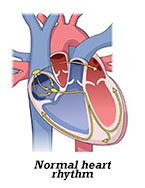 Unremarkably, special "pacemaker" cells in the eye send electrical impulses from upper to lower chambers (atria and ventricles), which have turns squeezing and relaxing to pump claret throughout the trunk. In that location are many factors that can influence this rhythm. These include physical activity, stress or excitement, for instance. Fever, aridity, and medical conditions like anemia tin also play a function. So can certain medications or consuming free energy drinks and other caffeine-containing beverages. In addition, some children are born with congenital weather condition that touch on the heart's muscles or electrical pathways and the way it pumps.
Irregular heartbeats that are usually normal
Irregular heartbeats, likewise called arrhythmias, are a common reason for referral to a pediatric cardiologist. Most often, these irregularities turn out to exist perfectly normal. Examples of these common simply usually harmless arrhythmias include:
Respiratory sinus arrhythmia - the most mutual irregular eye rate in children. It'south acquired by the normal change in how fast blood returns to the heart when they breath in or out. The center beats faster when they inhale, and slower when they exhale. The name "arrhythmia" is really misleading, since this variation in heartbeats occurs in all good for you children in varying degrees.
Premature or "skipped" eye beats - seen in upwards to 75% of pediatric patients. These irregular beats may beginning in either the acme chambers (premature atrial contractions) or the bottom chambers (premature ventricular contractions) of the eye. Patients feel like their heart "skipped" a beat due to a pause in the rhythm followed by a more forceful vanquish.
Normal Heart Rate Range for Children & TeensVariations in a child'southward middle rate is normal. Generally, though, a child'south heart rates slows as they get older. For example, a eye rate of 130 to 150 beats per minute is normal for a newborn infant, but it would exist considered fast for a school historic period child. An athletic teenager may accept a heart rate of 50 at balance but could have heart rate of 180 during heavy exercise. To check your child's pulse or heart rate, gently experience for a slight beat inside the wrist, the crook of the elbow, or side of neck. Count beats for xv seconds, and so multiply past four.
|
|---|
Irregular heart rhythms that may need evaluation & treatment
At that place are other types of irregular heartbeats that may need exist treated or monitored. These include:
Abnormally fast heartbeats
Supraventricular tachycardia (SVT) is the well-nigh common abnormal pediatric heart rhythm, affecting equally many every bit 1 in 250 children. Information technology happens when electric signals in the upper chambers of the heart misfire and cause a sudden burst of abnormally fast, "racing" heartbeats that last for seconds, minutes or longer. Near one-half of children with SVT, sometimes called atrial tachycardia, are diagnosed as infants. Episodes of SVT usually go away by a child's start altogether, although information technology tin can return.
There are dissimilar types and causes of SVT, including:
- Wolff-Parkinson-White syndrome affects children built-in with an extra electric pathway in the heart. That actress pathway may let impulses to motility in a different direction and faster than usual.
- Atrial flutter & atrial fibrillation happens when electrical signals from the upper sleeping accommodation of the heart are faster than those in the lower chamber, causing the heart to flutter rather than fully squeezing for a regular trounce. Atrial fibrillation is some other type of abnormally fast, quivering heart rhythm that is like to atrial flutter, but the abnormally fast beats are less regular. These conditions make information technology hard for the heart to pump blood effectively and increases the run a risk of issues like blood clots. Both are much less mutual than other types of SVT. Enquiry suggests they may be inherited genetically or linked to built heart abnormalities or heart muscle disorders like cardiomyopathy.
Ventricular tachycardia (VT) is a series of heartbeats starting in the lower chambers of the eye, rather than the upper chambers like normal, that crusade an abnormally fast rhythm. It is rare in children, but early identification tin can be lifesaving since information technology tin can raise the risk of sudden cardiac arrest. One blazon of VT is Long QT syndrome, an inherited condition that affects an estimated 1 in two,500 people. It causes the lower chambers of the middle to take too long to contract and release, causing a fast and cluttered heart rhythm.
Abnormally deadening heartbeat
Bradycardia – when the heart rate is below the normal low range for a child'south age. In children, ii of the most mutual types are:
- Sinus bradycardia is seen more often in premature infants. Possible causes include medications the baby was exposed to before birth, breathing problems or a drop in trunk temperature called hypothermia.
- Heart cake is when electrical signals are prevented from passing from the upper to lower chambers of the center. The condition often is caused by structural problems in the heart that affect the atrioventricular (AV) node, a cluster of specialized middle cells in the right atrium that act equally a natural "pacemaker."
Signs & symptoms of an abnormal middle rhythm in children
Infants with abnormal eye rhythms may seem extra irritable or fussy, have feeding difficulties, appear pale, and lack energy. Older children tend to have more specific symptoms such equally feeling a fluttering or pounding known equally heart palpitations, lightheadedness or fainting, breast pain or discomfort, and difficulty breathing.
How are aberrant heart rhythmsouth diagnosed?
If your child'southward dr. suspects a heart rhythm problem later on the physical test, he or she will recommend cardiac testing, which may include:
- Electrocardiogram (ECG or EKG). This fast and unproblematic test ordinarily is the get-go ane recommended to cheque for aberrant rhythm. It is normally able to ostend a diagnosis, just sometimes additional testing may exist needed.
- Article of clothing heart monitors. If a heart rhythm problem seems to come and go, or happens only in certain settings, a wearable heart monitor may help with diagnosis. Devices such equally a Holter monitor let an older kid press push when they feel symptoms over the form of a day or more. The doctor can then look at what the monitor showed was happening in the eye at that moment.
- Stress test. If the abnormal middle rhythm tends to happen mostly during practise, the physician may society an do stress exam. Your child rides a stationary cycle or runs on a treadmill while the md monitors the heart rhythm.
- Tilt-tabular array test. For children with abnormal rhythms linked to fainting, a tilt test can show how heart rate and claret pressure changes when a kid goes from lying down to continuing upwards.
- Imaging tests. Although uncommon, certain heart rhythm conditions may bespeak bug with the heart's construction. In these cases, imaging tests such equally an echocardiogram (ultrasound of the middle) may be needed.
Your pediatrician will likely refer yous to a pediatric cardiologist for follow upward. A pediatric electrophysiologist, who specializes in testing for center rhythm disorders, may also be part of your child's intendance team.
Handling for arrythmia
Although heart rhythm disorders can be worrisome, treatments and cures are available. Many center rhythm problems tin be controlled with medications. Implantable devices such as artificial pacemakers can besides assist keep middle rhythms regular. Other options include corrective surgery and other procedures such as radiofrequency ablation, which uses radio waves to heat upwardly certain heart cells in the heart to prevent them from letting electric currents through.
Additional Information :
- Dizziness and Fainting in Teens
- College with Congenital Eye Disease
About Dr. Kilinc:
 Orhan Kilinc , Physician, FAAP, a pediatric electrophysiologist at Joe DiMaggio Children's Hospital, is a fellow member of the American University of Pediatrics (AAP) Section on Cardiology and Cardiac Surgery, is, and the AAP Florida Chapter.
About Dr. Snyder:

Christopher S. Snyder, MD, FAAP , Chair of the AAP Section on Cardiology and Cardiac Surgery, is Director of Pediatric Cardiology at Rainbow Babies and Children'south Hospital, Case Western Reserve University School of Medicine. He is also a fellow member of the Ohio AAP affiliate.
Paradigm source: U.S. National Library of Medicine
The information contained on this Web site should non be used as a substitute for the medical care and communication of your pediatrician. At that place may exist variations in treatment that your pediatrician may recommend based on individual facts and circumstances.
Source: https://www.healthychildren.org/English/health-issues/conditions/heart/Pages/Irregular-Heartbeat-Arrhythmia.aspx
0 Response to "Is 90 a Low Heart Rate for Baby Sleeping Toddler"
Post a Comment